
How to Do Embroidery: Beginner’s Guide
If you’ve been staring at embroidered hoops online, wondering how to do embroidery without fumbling through tangled thread and frustration, you’re not alone. You’ve probably tried a few stitches that ended up messy, or felt overwhelmed by the jargon. I’ve been there — holding a needle like it’s a tiny enemy, wishing someone would just talk to me like a real person.
Here’s what most beginners miss: embroidery isn’t about perfect tension or fancy tools — it’s about rhythm, not precision. Start with a single stitch, a cheap hoop, and fabric you already own. This is your space to grow slow, make knots, and fall in love with the needle. Think of it as embroidery for beginners built by someone who once ruined three shirts before getting it right. Ready to learn embroidery your way? This hand embroidery tutorial walks you through the quiet joy of DIY embroidery, one stitch at a time.
Getting Started with Embroidery: Your First Steps into the Craft
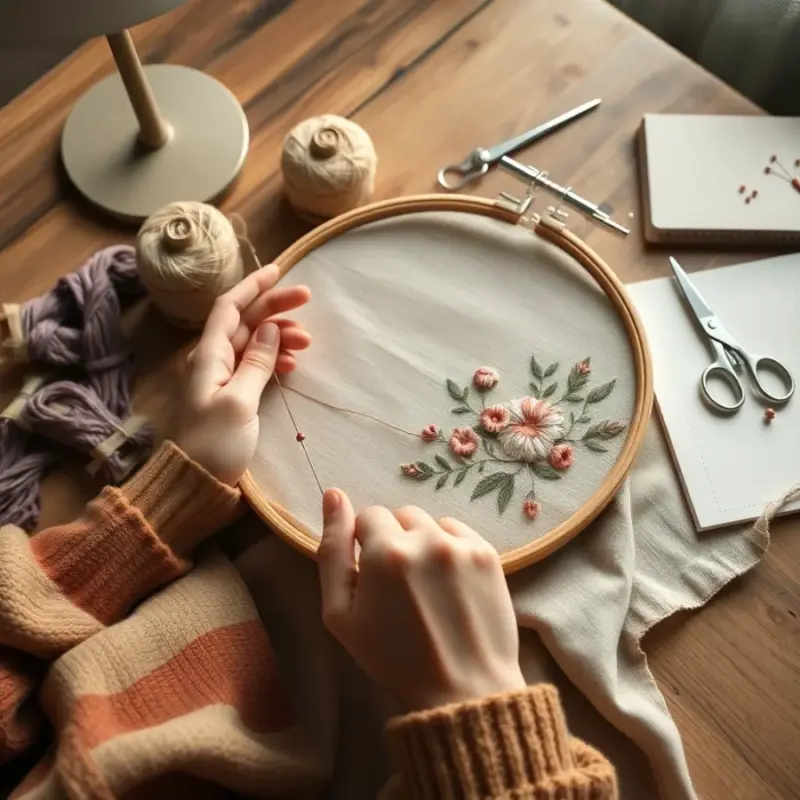
Embarking on the journey of embroidery for beginners can feel like stepping into a world where thread becomes paint and fabric turns into canvas. The art of decorating cloth with needle and thread has evolved from royal embellishment to a popular DIY embroidery hobby, accessible to anyone with curiosity and patience. In 2026, with social media buzzing with stitch journals and embroidery challenges, starting this craft is easier than ever—no formal training required.
Why Choose Hand Embroidery in 2026?
In an age of digital overload, many are turning to tactile, slow-moving crafts as a form of mindfulness. Hand embroidery offers a unique blend of creativity and calm, making it more than just a decorative skill—it's a form of self-expression and digital detox. Unlike machine embroidery, which prioritizes speed, hand embroidery allows full control over every stitch, making each piece deeply personal.
Another reason for its surge in popularity is the affordability and portability of supplies. You don’t need a dedicated studio or expensive equipment. A small kit fits in a tote bag, perfect for stitching during commutes or coffee shop afternoons. Whether you're personalizing denim jackets, creating heirloom hoop art, or gifting embroidered cards, DIY embroidery blends function with artistry.
- Low entry barrier: Basic kits cost under $20 and include everything you need
- Flexible timing: Work in 10-minute bursts or multi-hour sessions
- Eco-friendly: Upcycle old clothes or use organic cotton fabrics
- Social connection: Join online stitch-alongs or local embroidery circles
Essential Tools and Materials You’ll Need
Before diving into your first project, gather the core tools that make hand embroidery tutorial sessions smooth and enjoyable. The right supplies not only improve your results but also prevent hand fatigue and frustration. Think of them as your creative toolkit—each item serving a distinct purpose.
Start with an embroidery hoop, typically made of wood or bamboo. It keeps your fabric taut, ensuring even tension while stitching. Next, choose needles specifically designed for embroidery—these have larger eyes to accommodate multiple floss strands. Embroidery floss, usually made of cotton, comes in vibrant colors and can be separated into thinner strands depending on the desired effect.
- Embroidery hoop: 6-inch size is ideal for beginners
- Needles: Crewel or embroidery needles (sizes 5–10)
- Floss: DMC or Anchor brands offer consistent quality
- Fabric: Cotton, linen, or even canvas for structure
- Scissors: Small, sharp embroidery scissors for clean cuts
- Pattern: Printable templates or transfer pens for tracing
Mastering Basic Embroidery Techniques for Stunning Results
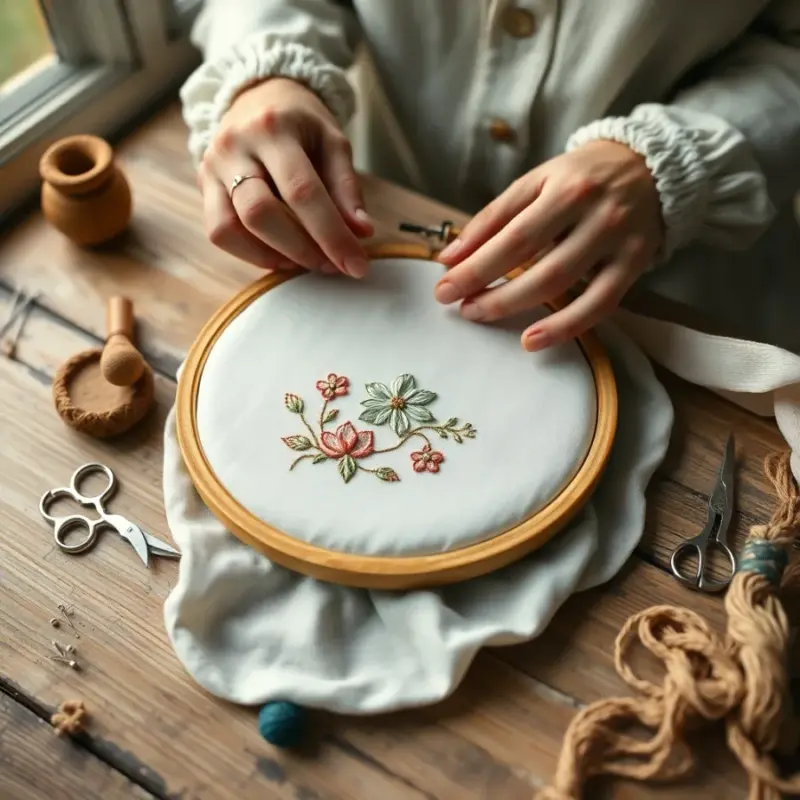
To truly learn embroidery, you don’t need to memorize dozens of stitches—just a handful will unlock countless design possibilities. Each stitch brings a different texture and function, from outlining shapes to filling large areas. The beauty of embroidery lies in layering these techniques to create depth and dimension.
Top 5 Stitches Every Beginner Should Know
These foundational stitches are the building blocks of most embroidery projects. Once mastered, you can combine them to create flowers, leaves, lettering, and geometric patterns. Practice them on a scrap fabric or a test hoop before moving to your final piece.
Begin with the backstitch, perfect for crisp lines and text. Then move to the running stitch, the simplest form—ideal for dashed lines or gathering fabric. The satin stitch fills shapes with smooth, solid color, while the French knot adds tiny dots of texture, great for flower centers or eyes in animal designs. Finally, the lazy daisy stitch creates delicate petals and leaves.
- Backstitch: Bring needle up at point A, down at B, then up again at C (just behind B), and repeat
- Running stitch: Evenly spaced up-and-down needle movements, like a dashed line
- Satin stitch: Long, parallel stitches side by side; keep edges neat for best effect
- French knot: Wrap floss around needle twice, insert close to entry point, pull through
- Lazy daisy: Form a loop, secure with a tiny stitch at the end to create a petal
Transferring Patterns and Choosing Your First Design
Selecting a beginner-friendly pattern is crucial. Look for designs with clear outlines and limited color changes. Many free patterns are available online, especially on platforms like Etsy, Pinterest, and dedicated embroidery blogs. For 2026, minimalist nature motifs—like single-line leaves, moons, or abstract waves—are trending.
To transfer the design onto fabric, use one of several reliable methods. The iron-on transfer pen leaves a temporary mark visible on light fabrics. Alternatively, the tracing method involves placing your fabric over the printed design on a lightbox or bright window. For precise results, consider using water-soluble stabilizer sheets, which dissolve after stitching.
- Print your pattern at actual size (100%)
- Use a low-tack tape to secure paper to fabric
- Trace gently to avoid puckering
- Double-check orientation, especially for text or asymmetrical designs
Step-by-Step Guide to Completing Your First Embroidery Project
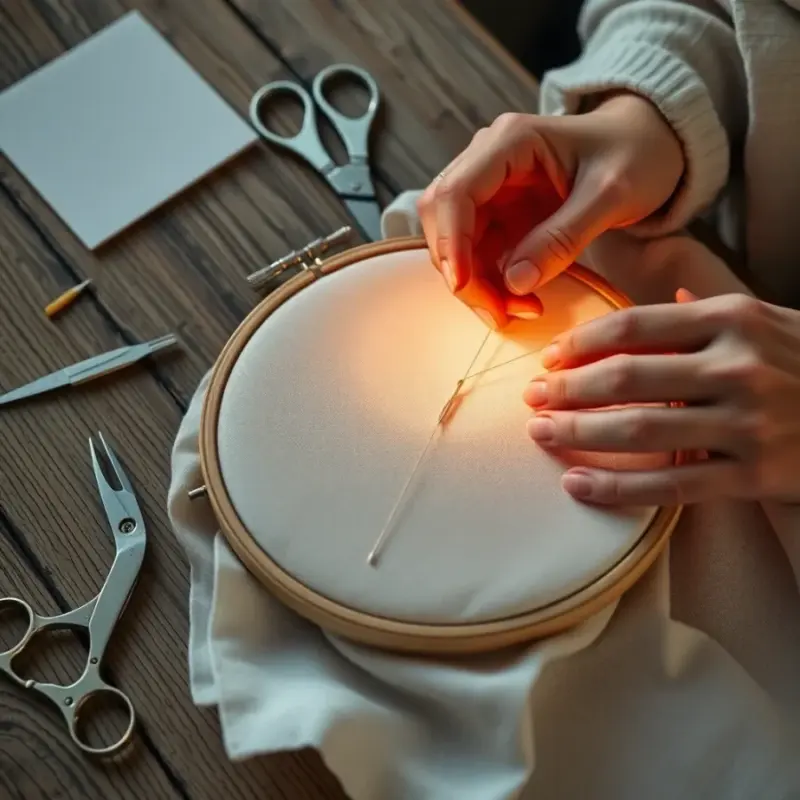
Now that you’ve gathered supplies and learned basic stitches, it’s time for the most exciting part: creating your first piece. This hand embroidery tutorial walks you through the entire process—from prepping the hoop to finishing with a clean backside. Follow these steps to ensure a professional-looking result, even as a novice.
Preparing Your Hoop and Fabric
Start by separating your embroidery floss. Most threads come in six-strand bundles, but for fine details, use only two or three strands. Use a thread separator or your fingers to gently pull them apart without tangling. Cut a length of about 18 inches—longer threads tangle easily, while shorter ones require frequent rethreading.
Place the inner hoop ring on a flat surface and lay your fabric over it, ensuring the area you’ll stitch is centered and wrinkle-free. Press the outer ring down to secure. Tighten the screw until the fabric is drum-taut but not stretched thin. If your fabric slips, lightly sand the inner ring or use a non-slip grip tape available in craft stores.
- Choose a 6-inch hoop for stability
- Center your transferred design under the hoop
- Adjust fabric tension before every stitching session
- Re-hoop if fabric shifts during long projects
Stitching with Confidence: Tips for Clean, Even Work
Hold the hoop in your non-dominant hand and use your dominant hand to guide the needle. Keep your stitches consistent in length and spacing—this is where practice pays off. If you make a mistake, don’t panic. Simply snip the thread on the back and re-stitch the area. Most errors are invisible once the piece is framed.
To avoid thread twisting, let the needle dangle occasionally, allowing it to spin and release tension. Always start stitching from the center of your design to maintain balance. When changing colors, secure the thread with a few small backstitches on the backside or use the "waste knot" method—place a temporary knot at the start, then cut it off once surrounding stitches anchor the thread.
| Stitch Type | Best For | Floss Strands | Difficulty |
|---|---|---|---|
| Backstitch | Outlines, text | 2–3 | Beginner |
| Running Stitch | Simple lines, borders | 1–2 | Beginner |
| Satin Stitch | Filling shapes | 3–6 | Intermediate |
| French Knot | Texture, dots | 2–3 | Intermediate |
| Lazy Daisy | Petals, leaves | 2–3 | Intermediate |
Finishing and Displaying Your Embroidery Art
Completing the last stitch is satisfying, but proper finishing ensures your work lasts for years. How you end and display your piece affects both its appearance and durability. Whether you're gifting it or hanging it in your living room, a polished finish makes all the difference in your DIY embroidery journey.
Securing Threads and Removing the Hoop
Never leave loose ends dangling on the back of your work. To secure a thread, slide the needle under 3–4 existing stitches on the reverse side, then trim close. For extra security, make a small knot, but only if the fabric is thick enough to hide the bump. Avoid pulling too tight, as this can pucker the fabric.
Once stitching is complete, loosen the hoop screw and gently remove your fabric. If creases remain, place the piece face-down on a towel and press with a warm iron—no steam. This flattens the fabric without damaging the stitches. For long-term storage, roll the piece around a cardboard tube rather than folding it.
- Always secure thread ends before removing from hoop
- Press carefully to avoid melting synthetic threads
- Trim excess fabric if framing, leaving at least 1.5 inches around the design
- Wash hands before handling to prevent oil transfer
Framing and Creative Display Ideas
The traditional embroidery hoop doubles as a ready-made frame, but there are more elegant and durable options. Wooden embroidery frames with glass protect your work from dust and UV damage. For a modern look, consider shadow boxes that give depth and space for layered designs.
Expand beyond hoops: stitch directly onto tote bags, pillowcases, or denim jackets for wearable art. In 2026, personalized embroidery is a top trend in slow fashion. Use your skills to refresh old clothes or create one-of-a-kind gifts. For wall displays, group small embroidered circles in a grid pattern or hang them from a wooden rod with clips—like a textile gallery.
- Use acid-free backing to prevent yellowing over time
- Add a label with date, stitch types used, and your initials
- Display away from direct sunlight to preserve color vibrancy
- Rotate pieces seasonally to reduce light exposure
Troubleshooting Common Embroidery Mistakes
Even experienced stitchers face challenges. Knowing how to fix common issues saves time and boosts confidence. The key is to view mistakes not as failures, but as part of the learn embroidery process. Most problems are easy to correct with a little patience.
Dealing with Tangled Thread and Fabric Puckering
Thread tangling is one of the most frequent frustrations. It usually happens when the thread is too long or rubbed against rough surfaces. To prevent this, cut shorter lengths and use a thread conditioner like Thread Magic or beeswax. Simply glide the floss through it to reduce friction.
Fabric puckering occurs when the stitches are too tight or the hoop is over-tightened. Always maintain even tension—your fabric should feel firm but not stretched. If puckering appears, gently loosen the hoop and adjust your stitch pressure. For delicate fabrics, use a stabilizer underneath to support the weave during stitching.
- Use thread conditioner to prevent knots
- Limit floss length to 18 inches
- Check tension every 10–15 minutes
- Use cutaway or tear-away stabilizer for stretchy fabrics
Fixing Uneven Stitches and Color Bleeding
Uneven stitches often result from inconsistent hand pressure or incorrect counting. To fix this, step back and assess your work under good lighting. Use a magnifier if needed. Re-stitch problematic areas, focusing on maintaining uniform length and spacing. Practicing on a stitch sampler helps build muscle memory.
Color bleeding is rare with quality floss, but it can happen if you wash the piece improperly. Always use cold water and mild detergent. Test a small thread snippet first. To prevent bleeding, avoid soaking for long periods. Air dry flat, away from direct heat.
| Problem | Root Cause | Solution |
|---|---|---|
| Thread tangling | Long thread, no conditioner | Use shorter lengths, apply beeswax |
| Fabric puckering | Over-tightened hoop, tight stitches | Adjust tension, use stabilizer |
| Uneven stitches | Inconsistent pressure | Practice on sampler, check lighting |
| Color bleeding | Poor floss quality or hot water | Use cold water, test first |
| Needle snagging | Dull needle, wrong fabric | Change needle, pre-punch holes if needed |
More Information
What’s the easiest way to start with embroidery for beginners?
Starting with simple patterns and basic stitches is a great way to learn embroidery without feeling overwhelmed. This hand embroidery tutorial approach helps build confidence before tackling more complex designs.
How can I learn embroidery if I’ve never used a needle before?
A beginner-friendly embroidery for beginners guide will walk you through threading, stitching, and securing your thread step by step. With practice, you’ll quickly master foundational embroidery techniques.
Where can I find step-by-step hand embroidery tutorials online?
Many free video and image-based hand embroidery tutorial resources are available on crafting websites and YouTube. These guides break down each stitch clearly so you can learn embroidery at your own pace.
What materials do I need for a DIY embroidery project?
For any DIY embroidery piece, you’ll need fabric, embroidery floss, a needle, and a hoop to keep the material taut. Choosing the right supplies makes mastering embroidery techniques much easier.
Leave a Reply