
Best Embroidery Hoop Stand Options for Crafters
You don’t need an embroidery hoop stand to stitch comfortably—many of the most intricate hand-embroidered pieces in history were made without one. In fact, relying on a stand can sometimes limit your mobility and natural stitching rhythm, turning a fluid craft into a rigid, posture-straining task.
Consider a textile artist working on a detailed floral pattern while traveling: a compact hoop in hand allows flexibility, while a bulky embroidery stand becomes excess baggage. The real value isn’t in stability alone, but in choosing when to use a hoop holder, stitching stand, or no support at all. Tools like the embroidery frame stand serve specific moments—not every moment.
What Is an Embroidery Hoop Stand and Why You Need One
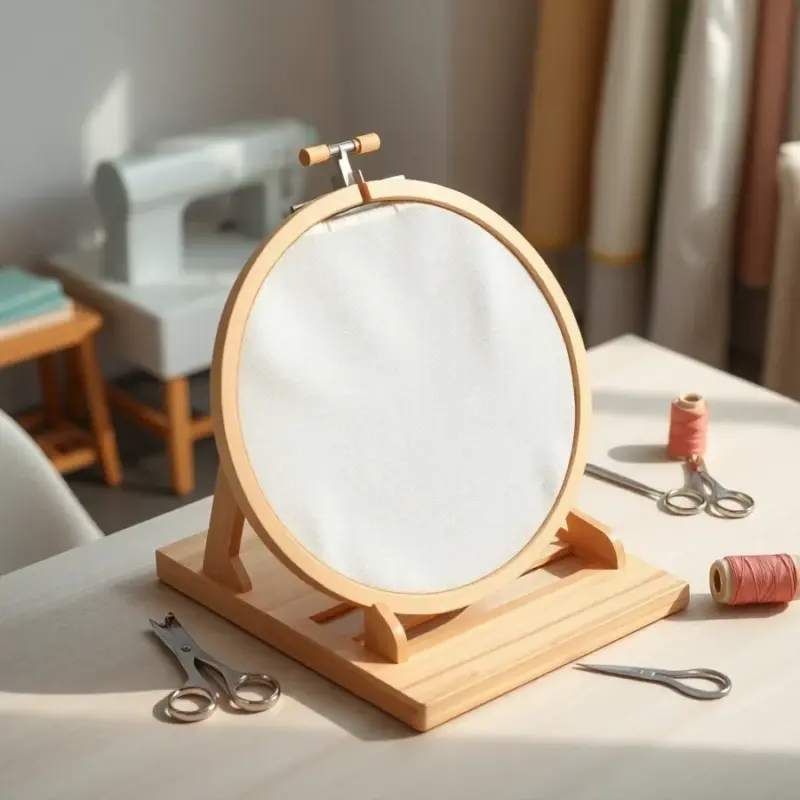
A embroidery stand is a supportive tool designed to hold your fabric taut without requiring constant hand pressure. It replaces the traditional handheld hoop by mounting the frame onto an adjustable arm, freeing both hands for stitching. This setup is especially valuable for long sessions, intricate designs, or when working on larger projects like quilts or wall hangings. Whether referred to as a hoop holder, stitching stand, or needlework stand, its purpose remains the same: to stabilize tension and reduce physical strain.
How an Embroidery Frame Stand Improves Stitching Accuracy
One of the most immediate benefits of using a embroidery frame stand is enhanced precision. When your fabric is clamped securely and held motionless, each stitch lands exactly where intended. There’s no shifting, puckering, or accidental pulling that often occurs when gripping a hoop manually. This stability is critical for counted cross-stitch, blackwork, or any technique that relies on consistent alignment across a grid.
Additionally, consistent tension prevents distortion in delicate fabrics like linen or evenweave cotton. Over time, uneven pressure from hand-holding can stretch certain areas more than others, leading to warped patterns. A well-designed needlework stand applies uniform force across the entire surface, maintaining the integrity of the weave. This is especially important for professional embroiderers or those creating heirloom-quality pieces meant to last decades.
- Steady tension: Ensures fabric doesn’t shift during stitching, reducing errors and rework
- Improved visibility: Elevates the work to eye level, minimizing neck strain and enhancing detail inspection
- Hands-free operation: Allows use of both hands for needle control and thread management
- Better lighting access: Enables placement under task lamps or daylight bulbs without obstruction
Types of Embroidery Hoop Stands Available in 2026
Today’s market offers several styles of embroidery hoop stand, each tailored to different needs and skill levels. The most common types include clamp-mounted stands, table stands with articulated arms, and floor-standing models with wide bases. Clamp versions attach directly to a desk or table edge, making them ideal for small workspaces. They often feature flexible gooseneck arms that allow multi-angle positioning.
Articulated arm stands, frequently found in professional studios, provide maximum adjustability. These use a series of joints and counterweights to let users position the hoop at any height or angle. Floor models are best suited for large-scale embroidery or tapestry work, where the fabric spans several feet. Some high-end models even integrate LED lighting and magnification lenses for detailed threadwork. As of 2026, many new stitching stands also include quick-release clamps for easy hoop swapping between projects.
Choosing the Right Stitching Stand for Your Workspace
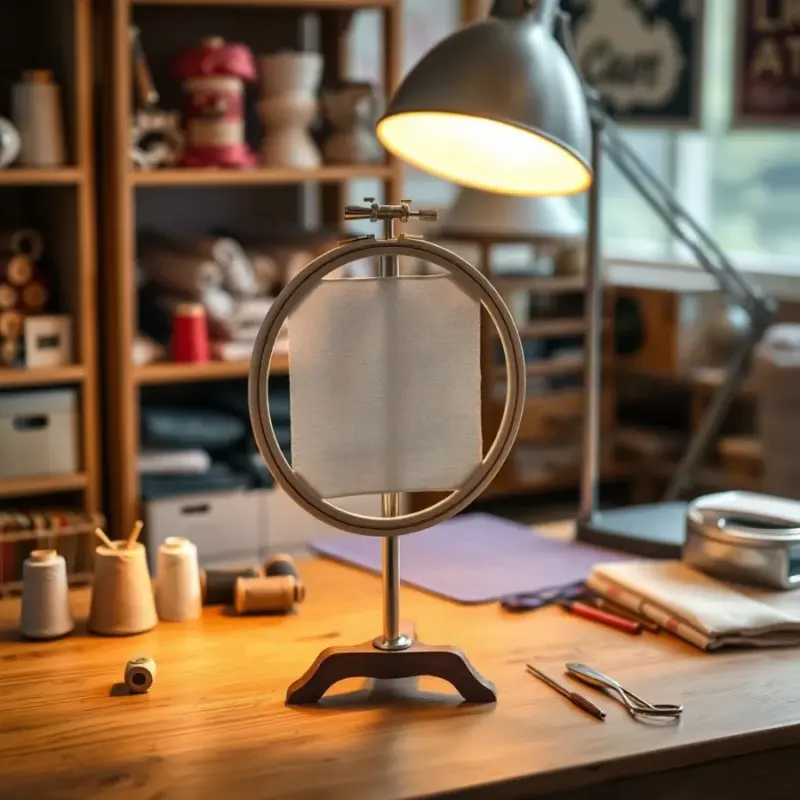
Selecting the ideal hoop holder depends on your available space, project scale, and physical comfort requirements. With rising interest in ergonomic crafting setups, manufacturers have responded with modular designs that adapt to home offices, studio environments, and portable kits. Understanding key features like adjustability, weight capacity, and compatibility with hoop sizes will help you make an informed decision.
Key Features to Look for in an Embroidery Stand
When evaluating a needlework stand, start by checking its range of motion. A good model should allow vertical lift, horizontal extension, and rotational tilt so you can work at the most comfortable angle. Look for stands with smooth, lockable joints—these prevent unwanted drift during stitching. Materials matter too: aluminum or reinforced polymer arms offer durability without excessive weight, while rubberized clamps protect your furniture from scratches.
Another crucial factor is hoop compatibility. Not all embroidery frame stands accommodate every hoop size or shape. Round hoops from 4” to 10” are standard, but some artisans prefer oval or rectangular frames for specific techniques. Confirm whether the stand uses universal clamps or requires proprietary attachments. Also consider the base type—larger bases offer more stability, while compact or clamp-on models save space but may tip if overextended.
- Adjustable height and reach: Essential for maintaining ergonomics and reducing fatigue
- Non-slip base or clamp: Prevents movement during use, especially on smooth surfaces
- Weight capacity: Must support your hoop and fabric without sagging or wobbling
- Quick-change mechanism: Allows seamless transition between different hoop sizes or projects
Top Embroidery Stand Models Compared (2026)
As of 2026, several models dominate the market based on performance, user feedback, and innovation. Below is a comparison of leading embroidery hoop stand options, highlighting their strengths for various use cases.
| Model Name | Type | Max Hoop Size | Adjustability | Price Range (USD) | Best For |
|---|---|---|---|---|---|
| ThreadCraft ProArm X5 | Articulated arm with clamp | 10 inches | 360° rotation, height & tilt control | $149–$169 | Detailed hand embroidery, cross-stitch |
| StitchMaster FloorStand 2000 | Floor-standing | 18 x 24 inches | Vertical lift, lateral slide | $279–$319 | Tapestry, large quilting panels |
| MiniHoop ClipStand Lite | Table clamp with gooseneck | 6 inches | Flexible neck, fixed base | $49–$69 | Beginners, portable use |
| ArtisanFrame Elite 3 | Dual-arm studio stand | 14 inches | Synchronized arms, motorized tension | $399–$449 | Professional studios, fine art embroidery |
| QuickStitch TravelMate | Folding clamp stand | 8 inches | Compact adjustment, lightweight | $79–$99 | On-the-go crafters, RV users |
The ThreadCraft ProArm X5 remains a top choice for intermediate stitchers due to its balance of flexibility and affordability. Its spring-loaded joints stay firm under pressure, and the micro-adjustment knobs let users fine-tune positioning down to the millimeter. Meanwhile, the StitchMaster FloorStand 2000 excels in large-format applications, supporting rectangular frames used in historical reproduction work.
For budget-conscious crafters, the MiniHoop ClipStand Lite delivers basic functionality without clutter. While it lacks advanced locking features, its flexible gooseneck allows intuitive repositioning. The ArtisanFrame Elite 3 stands out in professional circles with its motorized tension system—ideal for silk shading or goldwork where even the slightest variation affects outcome. Lastly, the QuickStitch TravelMate is built for mobility, folding flat for storage and including a padded carrying case.
How to Set Up and Use an Embroidery Frame Stand Effectively
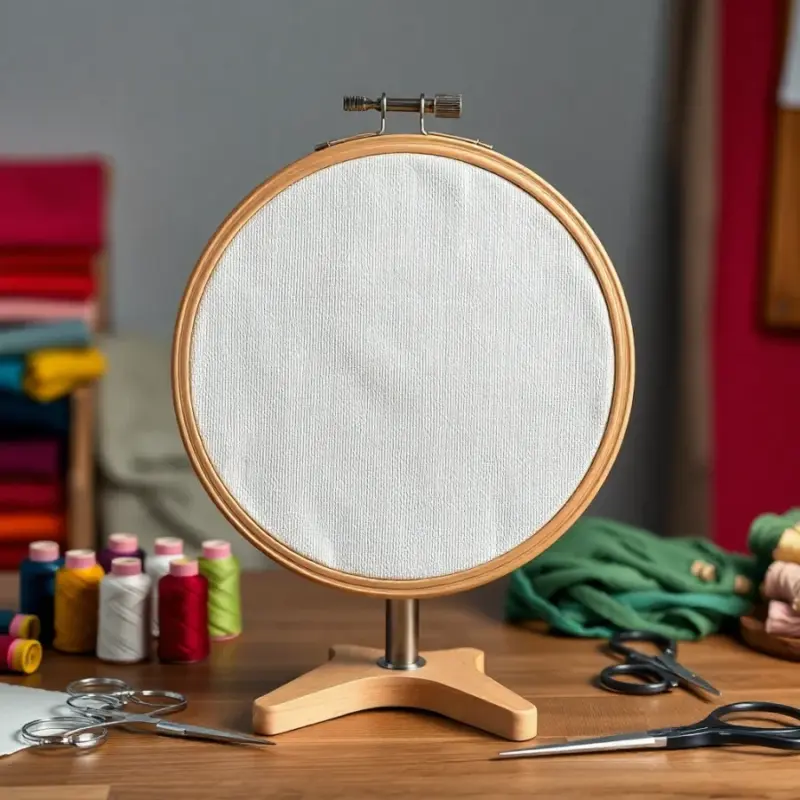
Proper setup is key to getting the most out of your embroidery stand. A poorly adjusted stand can lead to discomfort, fabric slippage, or inconsistent tension—undermining the very benefits it’s meant to provide. Whether you're using a simple clamp model or a full studio rig, following a structured approach ensures optimal performance and long-term usability.
Step-by-Step Guide to Installing Your Hoop Holder
Begin by selecting a stable work surface. For clamp-based stitching stands, ensure the table edge is between 0.75” and 2” thick—the typical range for secure attachment. Avoid glass or laminated surfaces unless the clamp includes protective padding. Position the base so the arm extends over your dominant stitching side, then tighten the screw until the clamp grips firmly without wobbling.
- Attach the main arm to the base or clamp according to the manufacturer’s instructions, ensuring all locking knobs are hand-tightened (do not overtighten).
- Mount your embroidery hoop into the stand’s clamp mechanism, making sure it sits level and centered.
- Adjust the height so the fabric plane aligns with your eye level when seated—this reduces neck strain.
- Set the working angle between 15° and 30° downward tilt for optimal visibility and hand access.
- Test tension by gently pressing on the fabric; it should feel drum-tight without creasing.
- Secure all joints and perform a final stability check by lightly nudging the hoop.
After installation, periodically inspect the stand during long sessions. Vibration from stitching or accidental bumps can loosen joints over time. Re-tightening the knobs every few hours maintains consistent performance. If your needlework stand includes additional accessories like thread organizers or lamp mounts, install them now for a fully integrated workspace.
Tips for Maintaining Fabric Tension and Ergonomics
Even the best embroidery hoop stand won’t perform well if fabric tension isn’t managed properly. Always center your design within the hoop before securing it to the stand. Use inner and outer hoops if your model supports them—this dual-layer system prevents slippage better than single clamps. For stretchy or delicate fabrics, consider using a stabilizer backing to reinforce tension without damaging fibers.
Ergonomics play a major role in long-term comfort. Sit in a chair with lumbar support and keep your feet flat on the floor. Your forearms should rest naturally on the table, with wrists straight and elbows at 90°. The ideal distance between your eyes and the fabric is 16–20 inches. If you wear reading glasses, position the embroidery stand so the fabric lies parallel to your line of sight—this prevents constant refocusing and eye fatigue.
- Regular re-tensioning: Loosen and re-clamp the fabric every 30–60 minutes to maintain even pull
- Use of magnifiers: Pair your stand with a swing-arm magnifying lamp for intricate detail work
- Cable management: Keep thread tails organized with clips or bobbins to avoid tangling
- Work in well-lit areas: Combine natural light with a 5000K LED lamp to reduce shadows and color distortion
Finally, clean your hoop holder regularly. Wipe down metal parts with a dry cloth to prevent dust buildup, and check screws and joints monthly for wear. For wooden components (common in traditional models), apply a light coat of beeswax annually to prevent drying or cracking. With proper care, a high-quality stitching stand can last over a decade, making it a worthwhile investment for serious embroiderers.
More Information
Can I use an embroidery stand with different hoop sizes?
Yes, most adjustable embroidery stand models accommodate various hoop sizes, allowing you to switch between projects easily. Look for a hoop holder with a flexible clamp and expandable arms for maximum compatibility.
What are the benefits of using a stitching stand while embroidering?
A stitching stand helps maintain proper tension and reduces hand fatigue during long sewing sessions. It keeps your hands free and improves precision, especially when working on detailed designs.
Is an embroidery frame stand suitable for left-handed users?
Yes, many embroidery frame stand designs are fully adjustable and work comfortably for both right- and left-handed crafters. The rotating clamp and 360-degree swivel make it easy to position the hoop correctly.
How do I secure a needlework stand to my table?
Most needlework stand models come with a sturdy base and a clamp that attaches firmly to tables up to 2 inches thick. Ensure the clamp is tightened properly to prevent movement during use.
Leave a Reply