
Embroidery Stitches Guide: Master the Basics
You search for embroidery stitches and drown in endless variations. Each tutorial assumes you know the basics. Tension trips you up—too tight, the fabric puckers. Too loose, and the thread sags. What should feel creative becomes frustrating. A simple stitch hides complexity. Even experienced hands hesitate. The problem isn’t your focus. It’s the gap between seeing a stitch and truly controlling it.
Every flaw in tension was once someone’s breakthrough. Tools don’t fix it. Perfection isn’t the goal. Understanding does. With the right embroidery techniques, even flawed lines gain purpose. Needlework stitches evolve with practice, not magic. Hand embroidery patterns respond to touch, not rules. These stitching methods breathe when you pause. Decorative sewing stitches aren’t about precision. They’re about presence.
What You Need Before Starting with Embroidery Stitches
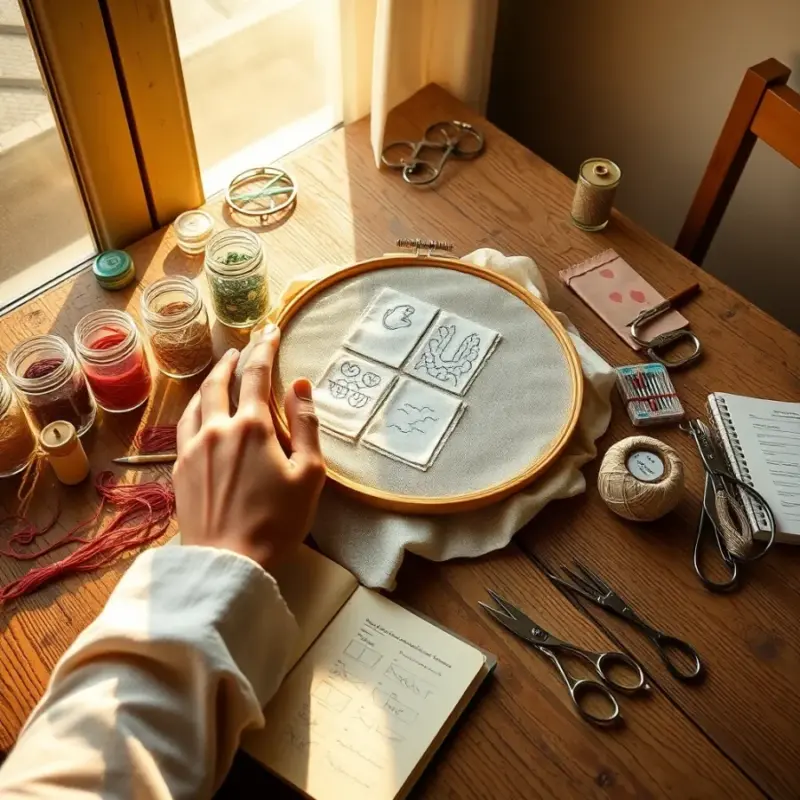
Embarking on the journey of hand embroidery is like opening a door to a world where thread becomes paint and fabric transforms into canvas. Whether you're aiming to create delicate heirloom pieces or bold modern designs, preparation is everything. The right tools and mindset set the foundation for beautiful results — and help you avoid frustration down the line. Think of this stage as laying the groundwork for every stunning piece of embroidery artistry you’ll create in 2026 and beyond.
Essential Requirements or Tools
To bring your creative vision to life with precision and joy, you’ll need a few non-negotiable items. These essentials support not only your technique but also the longevity and beauty of your finished work. Each tool plays a vital role in ensuring that your decorative sewing stitches look clean, consistent, and professional.
- Embroidery hoop: Keeps your fabric taut during stitching, preventing puckering and uneven tension — especially crucial when working with lightweight cotton or linen.
- Needles (embroidery or crewel needles): Sized perfectly for thread thickness; their sharp tips glide through fabric without damaging fibers, while the elongated eye accommodates multiple strands of floss.
- Embroidery floss (cotton or silk): High-quality thread ensures vibrant color, minimal fraying, and smooth stitching — essential for achieving crisp hand embroidery patterns.
- Scissors (small, sharp): Precision cutting prevents pulling threads or damaging nearby stitches — a must-have for clean finishes.
- Fabric (cotton, linen, or evenweave): A stable, tightly woven base gives your needlework stitches the support they need to shine.
- Transfer tools (water-soluble pen, carbon paper, or tracing wheel): Allows you to accurately transfer your design onto fabric without guesswork.
Estimated Time and Difficulty
The time investment for mastering basic embroidery techniques varies depending on your prior experience and the complexity of your chosen project. For beginners, expect to spend between 2 to 5 hours learning foundational stitches and completing a small sampler in 2026. More intricate projects — such as floral monograms or textured landscapes — can take anywhere from 10 to 30 hours, spread over several sessions.
As for difficulty, hand embroidery is surprisingly accessible. Most stitching methods can be learned in under an hour with practice. However, consistency in tension, spacing, and stitch length takes time to develop. Don’t be discouraged if your first few attempts look uneven — this is completely normal. With patience and repetition, your muscle memory will adapt, and your work will improve dramatically. Think of it like learning to play an instrument: the first notes might be shaky, but soon you’ll be creating symphonies with thread.
How to Embroidery Stitches — Complete Step-by-Step Guide
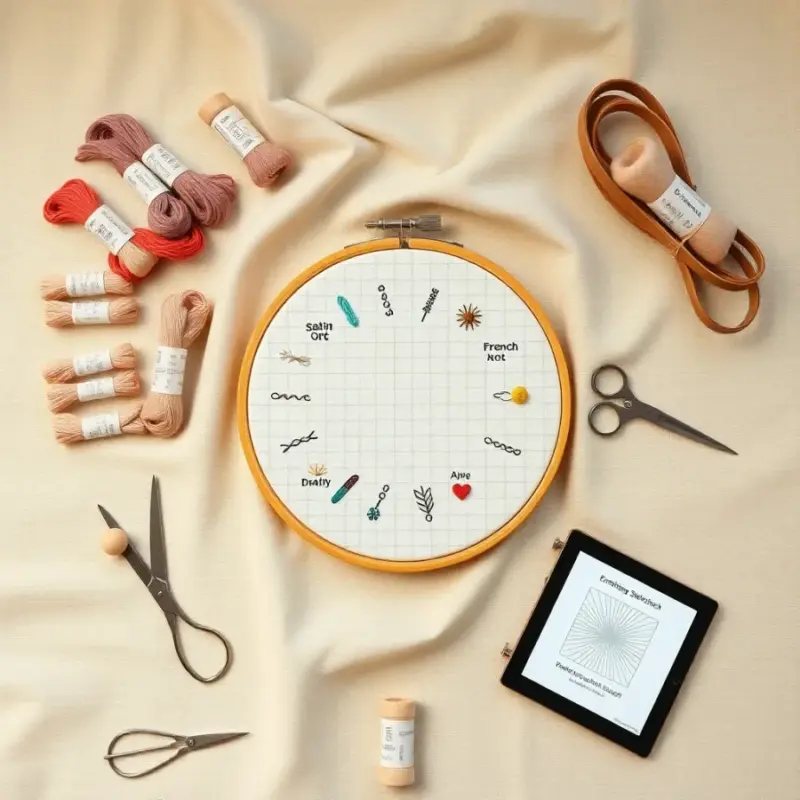
Step 1: Transfer Your Design Onto Fabric
The very first move in any successful embroidery project is getting your design onto the fabric with accuracy and clarity. This process, known as pattern transfer, sets the blueprint for all your upcoming embroidery techniques. Without a clear guide, even the most skilled stitcher can end up with misaligned motifs or distorted shapes. Start by choosing a simple design — perhaps a leaf, flower, or geometric shape — and print or trace it onto paper. Then, place the design face-down on your pre-washed and ironed fabric. Use a water-soluble pen or a tracing wheel with carbon paper to trace over the lines, transferring the image precisely. For darker fabrics, opt for a lightbox or window trick: tape your fabric and design to a bright window and trace the outline directly.
A common mistake here is pressing too hard with the pen, which can leave permanent marks or distort the fabric weave. Always test your transfer method on a scrap piece first. Also, remember to mirror your design if it includes text or directional elements — unless you want backwards lettering!
- Wash and press your fabric to remove wrinkles and shrinkage risks — this ensures a flat, stable surface.
- Secure your design and fabric together with tape or pins to prevent shifting during tracing.
- Use gentle, consistent pressure when tracing to avoid tearing the fabric or creating indelible lines.
Step 2: Secure the Thread and Begin Stitching
Now that your design is on the fabric, it’s time to thread your needle and make that first stitch. Choose a high-quality six-strand embroidery floss — brands like DMC or Anchor are trusted in 2026 for their colorfastness and smooth texture. Cut a length of about 18 inches (45 cm), as longer strands tend to tangle and fray. Separate the strands based on your desired thickness: most beginners use 2–3 strands for finer detail and softer texture. Thread the needle and tie a small knot at the end of the tail. Bring the needle up from the back of the fabric at your starting point, leaving the knot unanchored behind the surface.
Here’s a pro tip: instead of tying a knot, try the "waste knot" or "away knot" method. Place the knot away from your design area, then secure the thread later with small anchoring stitches underneath your work. This prevents unsightly bumps under tight stitching zones. Always pull the thread gently — never yank — to avoid stretching the fabric or breaking the strand. Keep your hands clean to prevent oils from staining the floss, and consider using a thread conditioner like Thread Magic for silky glide.
Step 3: Master the Basic Running Stitch
The running stitch is the gateway to all other needlework stitches — simple, rhythmic, and incredibly versatile. To execute it, push the needle up through the fabric at the start of your line, then down a short distance ahead (about 1/8 inch or 3 mm). Bring it up again the same distance forward, creating a dashed line of even stitches. Continue this “up-down-up” motion along the entire path. This stitch works beautifully for outlines, borders, or textured backgrounds in modern hand embroidery patterns.
Keep your stitches uniform by using a ruler or marked template as a guide. A frequent error is varying stitch length, which breaks visual harmony. Practice on a scrap fabric first until your spacing feels natural. For a bolder effect, double your thread or increase stitch length — but remember, consistency is key. You can also stagger two rows of running stitch to create a “dashed grid” effect, popular in contemporary textile art.
Step 4: Build Texture with the Satin Stitch
When you want smooth, solid fills in flowers, leaves, or letters, the satin stitch is your go-to stitching method. It involves laying parallel threads side by side to cover a shape completely. Begin at one edge of the area to be filled, bring the needle up, and take it down at the opposite edge. Repeat this across the shape, keeping stitches close together and parallel. For best results, outline the shape first with a split or back stitch to give the satin stitch clean boundaries.
One major challenge with satin stitch is thread tangling or fabric distortion. To prevent this, don’t pull too tightly — maintain even, moderate tension. For wider shapes, add a center-guiding line of split stitch or use long-and-short stitch (a variation that blends colors and avoids ridges). Always work in the same direction (e.g., top to bottom) to keep the sheen consistent. This stitch shines in custom patches, greeting cards, and modern wall art.
Step 5: Finish and Secure Your Work
After completing your final stitch, it’s essential to secure the thread properly so your hard work doesn’t unravel. Do not simply cut the thread — instead, run the needle under several existing stitches on the backside of the fabric. Slide it through the loop created just before pulling tight (a “locking stitch”), or weave it back and forth through 3–4 stitches to anchor it invisibly. Trim excess thread close to the fabric, but not so close that it pulls out.
You’ll know this step worked if the thread stays firmly in place when you gently tug the fabric. Flip your work over and inspect the back: it should be tidy, with minimal loose ends or knots marring the surface. If you're framing your piece, now is the time to remove the hoop and give it a final press with a damp cloth (on the reverse side) to smooth any creases. Your completed embroidery is now ready for display — a true testament to your growing mastery of embroidery techniques.
Common Mistakes and How to Avoid Them with Embroidery Stitches
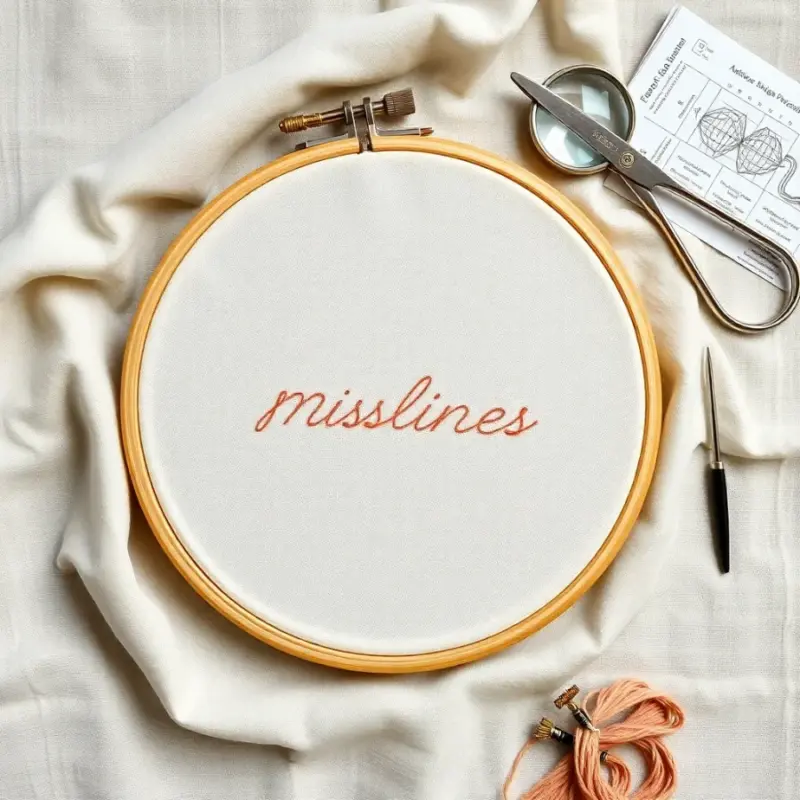
Frequent Mistake or Question 1: Why Do My Stitches Look Uneven?
This is perhaps the most common frustration among beginners — you follow the steps, yet your stitches appear jagged, loose, or inconsistent. The culprit? Inconsistent tension and irregular stitch length. When you pull some threads tighter than others, or vary the distance between stitches, the final look becomes chaotic rather than harmonious. For example, a running stitch line meant to resemble a delicate vine ends up looking like a wobbly fence.
The fix lies in practice and mindfulness. Use a printed grid or stitch guide under your fabric to maintain spacing. Focus on rhythm: think of stitching like typing — steady, repeated motions produce cleaner results. Also, check your posture. Sitting too far from the hoop or holding the fabric awkwardly affects control. Keep your hands relaxed and your workspace well-lit to maintain precision.
Frequent Mistake 2: My Fabric Is Puckering — What Went Wrong?
Puckering happens when the fabric draws in and wrinkles around your stitching, usually because the thread tension is too tight. This is especially noticeable with satin stitch or dense fill patterns. Over-tightening forces the fabric fibers to compress, creating an unsightly dimpled effect. It’s like pulling a rubber band too hard — something’s got to give.
To avoid this, always hoop your fabric snugly but not drum-tight. Use the right number of floss strands — sometimes less is more. For large filled areas, consider using a stabilizer underneath, such as tear-away or cut-away backing, which supports the fabric during stitching and prevents distortion. Remove it carefully afterward. Also, switch to a slightly larger needle if you notice the thread dragging the fabric — a smoother passage means less resistance.
Advanced Tip for Better Results: Use Layered Stitching for Depth
Want your embroidery to leap off the fabric with dimension and drama? Embrace layered stitching — a pro-level trick that separates amateur work from gallery-worthy art. Instead of relying on a single stitch type, combine multiple decorative sewing stitches within one motif. For instance, fill a flower petal with long-and-short stitch for gradient color, then outline it with a whipped back stitch for glow. Add French knots in the center for 3D texture.
This method mimics how light interacts with real petals, leaves, or fabric folds. It’s widely used in modern botanical embroidery and portrait work. Plan your layers from background to foreground, just like painting. Always let lower layers dry (settle) before adding top stitches to avoid crushing delicate textures. This technique transforms flat designs into living, breathing textile art — and trust me, once you try it, you’ll never go back to flat fills again.
| Common Mistake | Why It Happens | Solution |
|---|---|---|
| Uneven stitch length | Inconsistent hand movement or lack of visual guide | Use a printed grid or stitch marker; practice on sampler fabric |
| Frayed thread ends | Poor quality floss or excessive rubbing through fabric | Trim thread cleanly; use thread conditioner; reduce strand count |
| Twisted thread during stitching | Needle rotating with each pass, especially with long lengths | Use shorter thread (18” max); let needle dangle to untwist periodically |
| Color bleeding in floss | Low-quality or non-colorfast thread exposed to water | Use reputable brands (DMC, Anchor); pre-wash questionable threads |
More Information
What are the most basic embroidery techniques for beginners to learn?
Start with simple needlework stitches like the running stitch and backstitch—they’re foundational and easy to master. These basic stitching methods build confidence and precision for more complex hand embroidery patterns.
How do I choose the right decorative sewing stitches for my fabric?
Consider fabric weight and thread type when selecting embroidery techniques—lighter fabrics suit delicate stitching methods, while heavier materials can handle bold needlework stitches. Matching the right stitch to your material ensures clean, lasting results.
Can I mix different hand embroidery patterns in one project?
Absolutely! Combining various stitching methods adds texture and visual interest to your work. Just ensure the decorative sewing stitches complement each other in scale and density.
Where can I find reliable guides for traditional needlework stitches?
Many craft websites and embroidery books offer step-by-step tutorials for classic embroidery techniques. Look for resources that detail both modern and historic stitching methods to expand your creative toolkit.
Leave a Reply